Vitamin and mineral supplements are not “nutrition”. While getting vitamins and minerals is better through food, sometimes supplements are needed to pick-up the slack. Spread the supplements out throughout the day, such as 3-4 times daily. Do not take them all at once. If your urine is a bright/vivid yellow, you are probably taking too many supplements at one time; the body is just peeing them out – a waste of money.
There are only four nutrients found in animal-based foods but not in plant-based foods: cholesterol, vitamins A, D, and B12. Our bodies produce cholesterol, meaning it is not an essential nutrient, and we can also make vitamin A from plant-supplied beta-carotene. The best way to get vitamin D is through moderate exposure to sunshine. Individuals on an exclusively plant-based diet should get their blood levels checked and choose a low-dose vitamin B12 supplement if necessary.
Micronutrients
Calcium is a bit of a wanderer; without these vitamins, it tends to end up in arteries (causing calcification) rather than bones.
- Vitamin D3: Think of this as the “Gatekeeper.” It is required for intestines to absorb calcium from food in the first place.
- Vitamin K2 (specifically MK-7): This is the “Traffic Cop.” It activates a protein called osteocalcin, which physically binds the calcium to the bone matrix.
- Magnesium: About 60% of the body’s magnesium is stored in bones. It helps convert Vitamin D into its active form.
Multi-Vitamin
A standard “one-a-day” multi-vitamin is often a missed opportunity. To “lock” calcium and protect breast tissue, “Multi” strategy should look for these specific bio-available forms.
1. The “Must-Haves” in a Bone-Breast Multi
If you are looking for a comprehensive supplement, check the label for these “Gold Standard” versions of the nutrients we’ve discussed:
- Vitamin D3 (from Lichen): Ensure it is D3, not D2. D3 is significantly more effective at raising blood levels to that protective 40–60 ng/mL range.
- Vitamin K2 (as MK-7): This is non-negotiable. Without MK-7, the calcium you absorb from your multi (or your food) may end up in your breast tissue or arteries instead of your bones.
- Vitamin B12 (as Methylcobalamin): This active form bypasses “conversion” issues and immediately starts lowering the homocysteine that makes bones brittle.
- Magnesium (as Glycinate or Malate): Avoid “Magnesium Oxide” (common in cheap multis), which is poorly absorbed and mostly acts as a laxative. Glycinate helps with sleep and “unlocks” your D3.
- Iodine (from Kelp): Crucial for breast health. Iodine helps regulate the estrogen receptors in breast tissue, making them less sensitive to “aggressive” estrogen signals.
2. What to AVOID in a Multi
Some ingredients in a standard multi can actually work against your goals:
- Vitamin A (as Retinol): High levels of pre-formed Vitamin A can actually interfere with Vitamin D and trigger bone loss. Look for “Beta-Carotene” (the plant version) instead, as the body only converts what it needs.
- Calcium Carbonate: As we discussed, large “spikes” of cheap calcium can lead to calcification. It is often better to have a multi with low calcium (letting your greens do the work) but high co-factors (D3, K2, Magnesium).
- Synthetic Folic Acid: For breast health, “Methyl-Folate” is safer and more effective than “Folic Acid,” which can sometimes mask a B12 deficiency.
3. The “Synergy” Schedule
Even the best multi-vitamin won’t work if the timing is wrong. Nutrients compete for “doors” (receptors) in your gut.
- Morning (with fat) – D3, K2, B12, Omega-3 – These are “energy” and “activation” nutrients. They need fat (avocado/nuts) to get into your system.
- Evening – Magnesium, Potassium, Turmeric – These are “repair” and “calming” nutrients. They support the “construction shift” while you sleep.
The “Ideal Multi” Checklist
If you are shopping for a vegan-friendly, bone-protecting multi, look for these marks:
- “Whole Food Based”: Usually means the nutrients are easier for the gut to recognize.
- “Third-Party Tested”: Ensures there are no heavy metals (like lead), which can settle in bone tissue.
- “Iron-Free” (unless needed): Excess iron can cause oxidative stress in breast tissue. If you aren’t anemic, an iron-free multi is often better for long-term breast health.
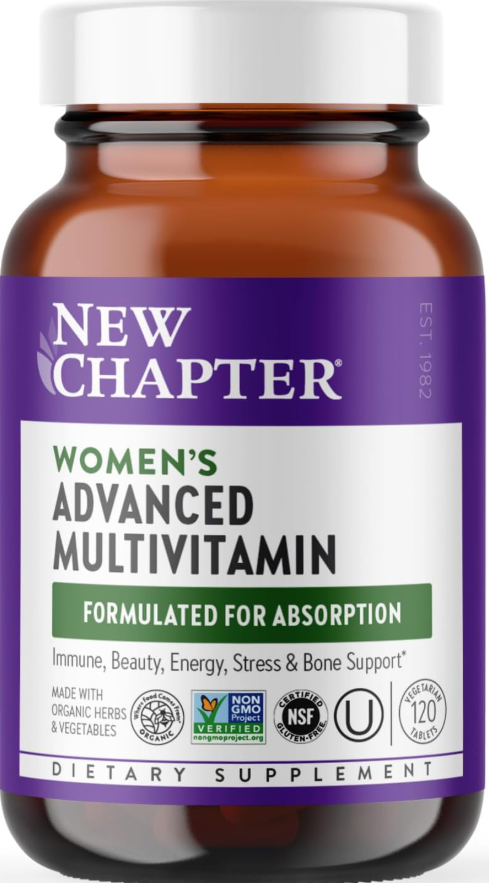
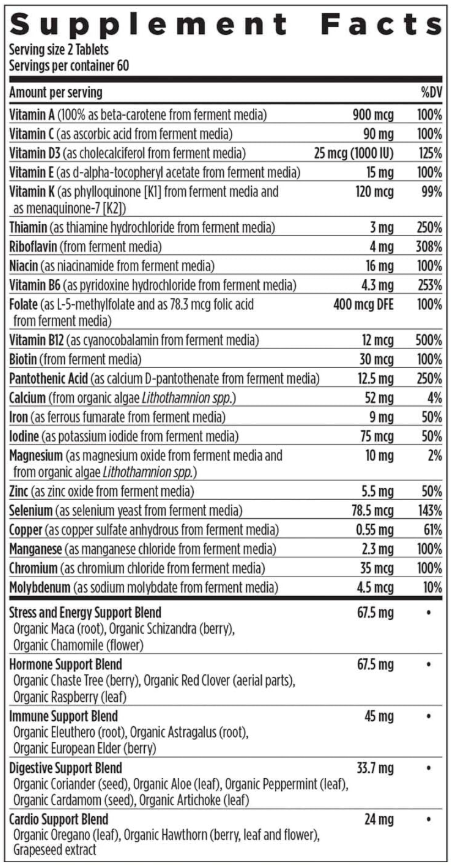
This is the supplement brand I use as an example (Vegan): There is a version with no iron added.
New Chapter Women’s Multivitamin Advanced Formula. Whole-Food Fermented – gentle enough to take anytime—even on an empty stomach.